
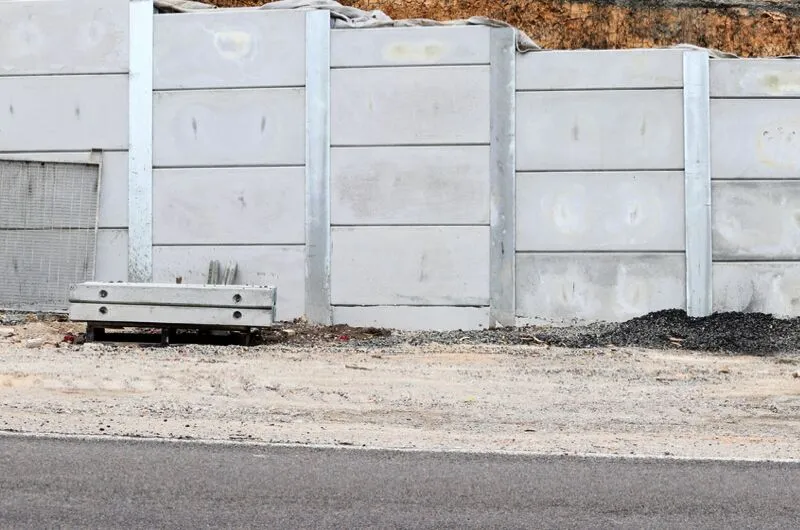
King Post Retaining Walls
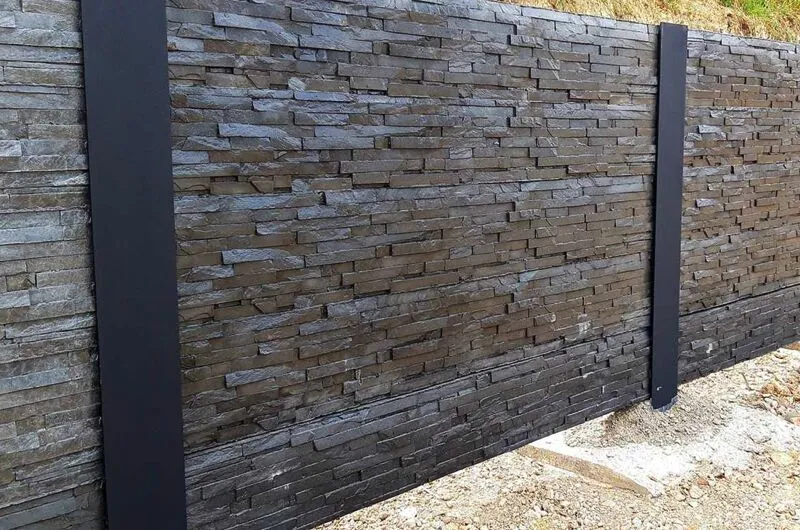
Flexible Retaining Wall Systems for Residential and Commercial Projects
King post retaining walls are a practical solution for supporting ground, managing level changes, and creating usable space on challenging sites. By combining steel columns with precast concrete panels, this system provides a strong, adaptable retaining structure that can be installed efficiently and tailored to site conditions. At Basetec Piling, we deliver king post retaining walls across the North West, working alongside engineers, builders, and developers to provide reliable solutions for both temporary and permanent works.What Are King Post Retaining Walls?
A king post retaining wall is formed using vertical steel columns, typically installed into piled or concrete foundations, with concrete panels placed between them to retain soil or materials. This method allows for a controlled installation process and is often used where access is limited, ground conditions are variable, or excavation needs to be managed carefully. King post systems are commonly used for:- Earth retention on sloped or uneven ground
- Basement enabling works and temporary support
- Garden and residential retaining walls
- Commercial yards, storage areas, and infrastructure projects
Design Considerations and Limitations
King post retaining walls are a versatile system, but they are not suitable for every site. One of the key requirements is that the ground can be excavated to the necessary depth to install the steel posts.
As a general guide, posts are embedded to a depth of around 1.5 times the retained height, although this is always confirmed through engineering design.
They may not be suitable where ground conditions include:
- Large boulders or bedrock
- Underground obstructions
- Made-up or heavily contaminated ground
Early assessment of ground conditions helps determine whether a king post system is the right approach or if an alternative retaining solution is required.
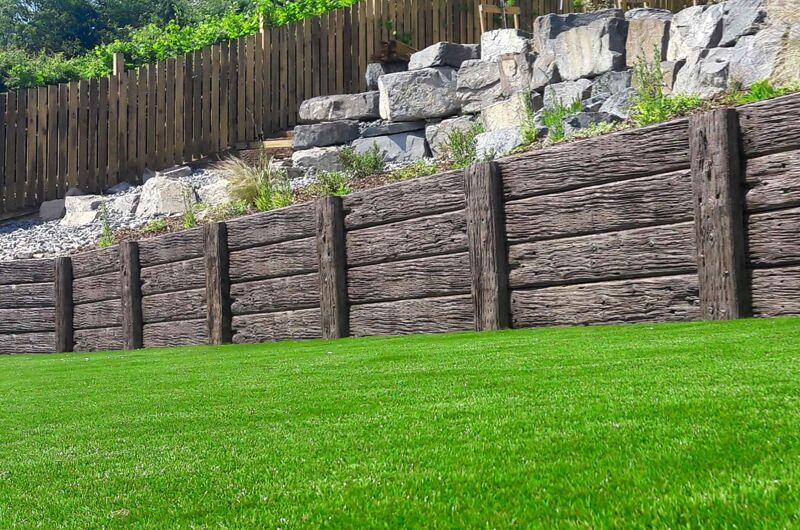
King Post Retaining Walls in the North West
We install retaining walls across the North West, including Lancashire, Greater Manchester, Cheshire, Merseyside, and Cumbria. Each project is approached based on ground conditions, loading requirements, and the overall design of the site. Our team works closely with structural engineers to ensure the retaining wall integrates with the wider foundation strategy, particularly where piling is required to support the steel columns.How King Post Retaining Walls Are Installed
Site Preparation and Setting Out
Accurate setting out is essential. Positions for each steel column are marked based on the engineer’s design, ensuring alignment and correct spacing.Piling or Foundation Installation
Depending on ground conditions, steel posts are installed into bored piles, concrete pads, or other suitable foundation systems. This provides the structural support required for the retaining wall.Steel Installation
Universal beams or columns are positioned and fixed in place, forming the vertical structure of the wall.Panel Installation
Precast concrete panels are then placed between the steel sections, creating the retaining face. Installation is controlled and efficient, reducing time on site.Drainage and Finishing
Drainage provisions are added where required to manage water pressure behind the wall. The site is then prepared for the next stage of construction.Engineering Design and Structural Performance
The performance of a king post retaining wall depends on accurate structural and geotechnical design. Embedment depth, post size and spacing are all determined based on ground conditions and loading requirements.
This is typically assessed using geotechnical analysis, which evaluates soil parameters and ensures the wall remains stable under expected loads.
Failure is rare when correctly designed, but can occur if:
- Steel posts are overstressed and permanently deform
- Infill panels crack due to excessive loading
- Ground conditions are unable to support the system
This is why every retaining wall must be designed specifically for its site rather than relying on standard assumptions.
Why Choose King Post Retaining Walls?
King post retaining walls are widely used because they offer a balance of strength, flexibility, and buildability across different types of projects. Key advantages include:- Suitable for a wide range of ground conditions
- Works well on restricted or urban sites
- Faster installation compared to in-situ retaining walls
- Flexible design for varying heights and loads
- Can be integrated with piling and foundation systems
Post spacing is an important part of the design and will vary depending on loading and panel type.
- Typical spacing ranges from 1.5m to 3m centres
- Around 3m spacing is often the most economical for structural performance
- 2.5m centres are commonly used for plain concrete panels
- 1.8m centres are typical for garden walls or where sleeper-style panels are used
The final layout is always confirmed through engineering design to balance strength, cost and practicality.
Designed Around Your Site Conditions
Every retaining wall is influenced by ground conditions, load requirements, and how the space will be used. We work alongside engineers and project teams to ensure the system is suitable for:- Soil type and bearing capacity
- Wall height and retained loads
- Access for installation equipment
- Drainage and long-term performance
Materials and Components
King post retaining walls are built using a combination of structural steel and infill panels, with materials selected based on performance, appearance and longevity.
Steel Posts
Steel UC (Universal Column) sections are the most commonly used option due to their strength and reliability. Posts can be:
- Left untreated, with corrosion allowance included in design
- Hot-dip galvanised for long-term protection
- Coated with specialist paint systems depending on exposure conditions
Infill Panels
Panels are typically precast concrete or timber, although precast concrete is generally preferred for durability and consistency.
Options include:
- Plain concrete panels for structural applications
- Textured finishes such as timber-effect or slate-effect for visual appeal
- Various thicknesses and heights to suit load and span requirements
A Practical Solution for Long-Term Retention
King post retaining walls are often chosen where projects need a reliable retaining system without complex construction methods. The system allows for controlled installation and can be adapted as project requirements change. For residential, commercial, and infrastructure projects, they provide a straightforward way to manage ground levels and support surrounding structures.King post retaining walls are widely used because they are efficient and adaptable, but understanding both strengths and limitations is important at the planning stage.
Advantages
- Minimal excavation footprint, ideal for restricted sites
- Fast installation with the right plant and access
- Flexible design to suit different heights and loads
- Can provide an attractive finished appearance with feature panels
- Long service life when designed and installed correctly
Considerations
- Requires sufficient excavation depth for post installation
- Not suitable for rocky or obstructed ground conditions
- Needs access for specialist plant and lifting equipment
- Must be designed and installed by experienced contractors
WANT A FREE QUOTE?
GET IN TOUCH NOW !
Project Categories
Recent Projects
 Piling Support for Spring Construction Projects
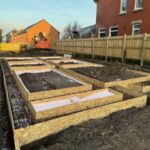 Piling Support for Spring Construction Projects
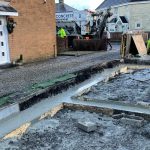 Piling Solutions for Poor Ground Conditions and Weak Soil
 Piling for Restricted Access Sites
- Piling Project – Croston Road, Leyland
 Piling Project – Riverside Drive, Radcliffe
 Piling in King George Gardens, Carlisle
 Piling in Hapton Way, Rossendale
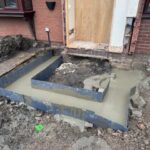 Piling in Hawksheath Close, Bolton
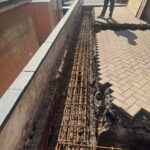 Underpinning & Piling in Bradford